
Pollarding in Wiltshire
Pollarding is a specialist tree management technique that requires careful planning, the right timing and a thorough understanding of how different tree species respond to hard pruning. Johnsons Arborist provides professional pollarding services to domestic and commercial clients across Melksham, Chippenham, Devizes, Calne, Trowbridge, Bath and the wider Wiltshire area.
All pollarding work is carried out by City & Guilds qualified arborists in line with British Standard 3998.
What is pollarding?
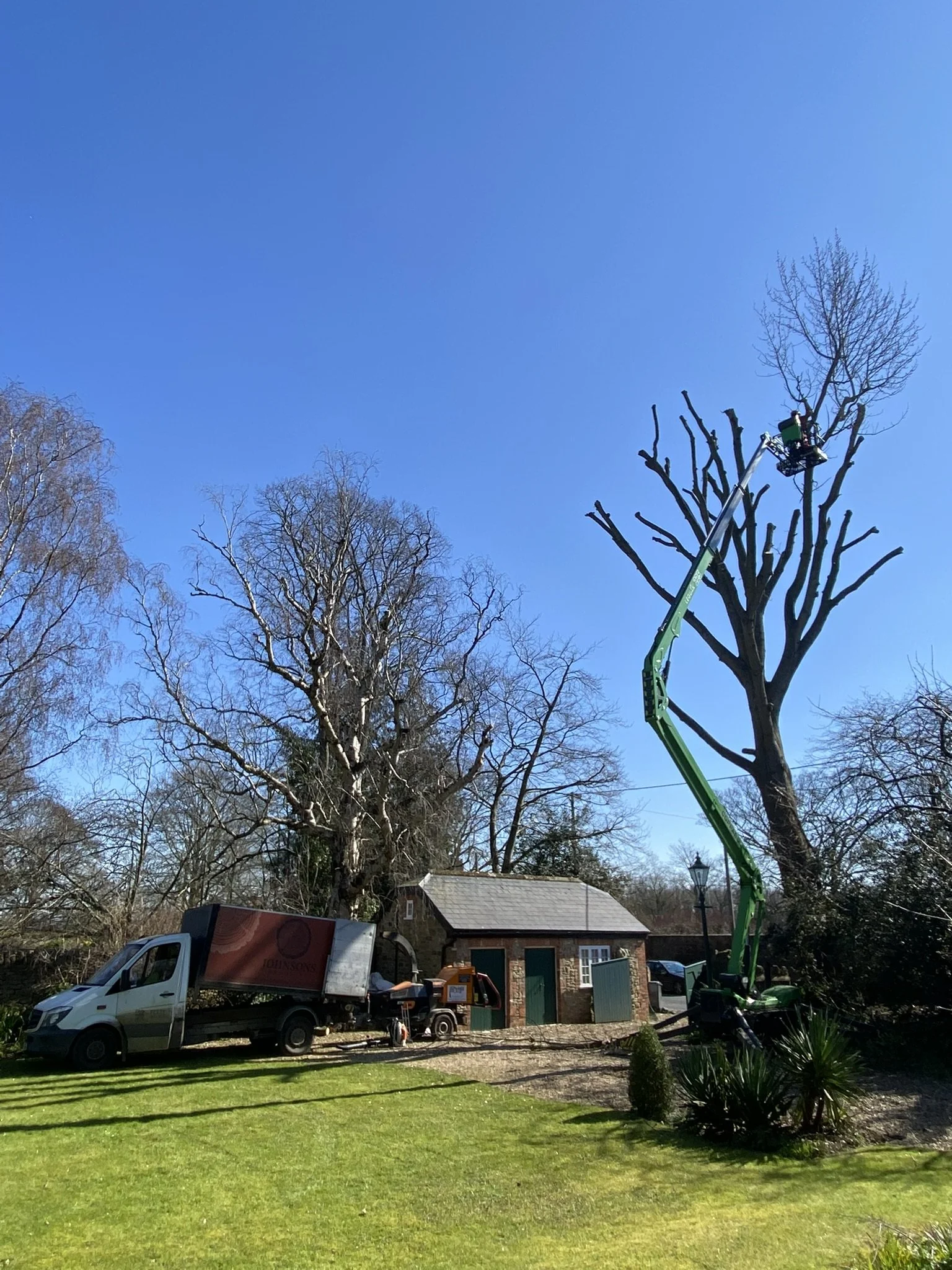
Pollarding involves removing all or most of the upper branches of a tree back to the main trunk or to a framework of main branches, stimulating the growth of a dense head of new shoots. It is a more severe operation than crown reduction and results in a very different tree form - a characteristic rounded or knobbly head of regrowth on a clear stem.
Pollarding has been practised in the UK for centuries, originally as a way of harvesting timber for fuel and fencing whilst keeping the tree out of reach of grazing livestock. Today it is most commonly used as a way of managing tree size in urban and suburban settings.
When is Pollarding appropriate?
Pollarding is not suitable for every tree or every situation. It is most appropriate where:
A tree has significantly outgrown its space and crown reduction alone would not achieve a sufficient reduction in size
A tree is growing close to overhead power lines or buildings and needs to be kept to a strict height
The species responds well to hard pruning - willows, limes, planes, London planes and some oaks are among the most suitable candidates
A pollarding regime is already established and the tree needs to be maintained on a regular cycle
A tree needs to be rejuvenated following years of neglect or poor management
Pollarding is generally not recommended for conifers or many ornamental species, as these do not regenerate well from old wood. Our team will always advise honestly on whether pollarding is the right approach for your tree before any work begins.
The importance of ongoing management
Pollarding is a long term commitment
Once a tree has been pollarded it needs to be maintained on a regular cycle - typically every two to five years depending on the species and the desired effect. Allowing a pollarded tree to grow unchecked for too long results in heavy, weakly attached regrowth that can become a significant structural risk over time.
If you have an existing pollarded tree that has not been attended to for several years, it is important to have it assessed by a qualified arborist before any further work is carried out. We can advise on the best course of action and set up a long term maintenance programme to keep the tree safe and well managed going forward.
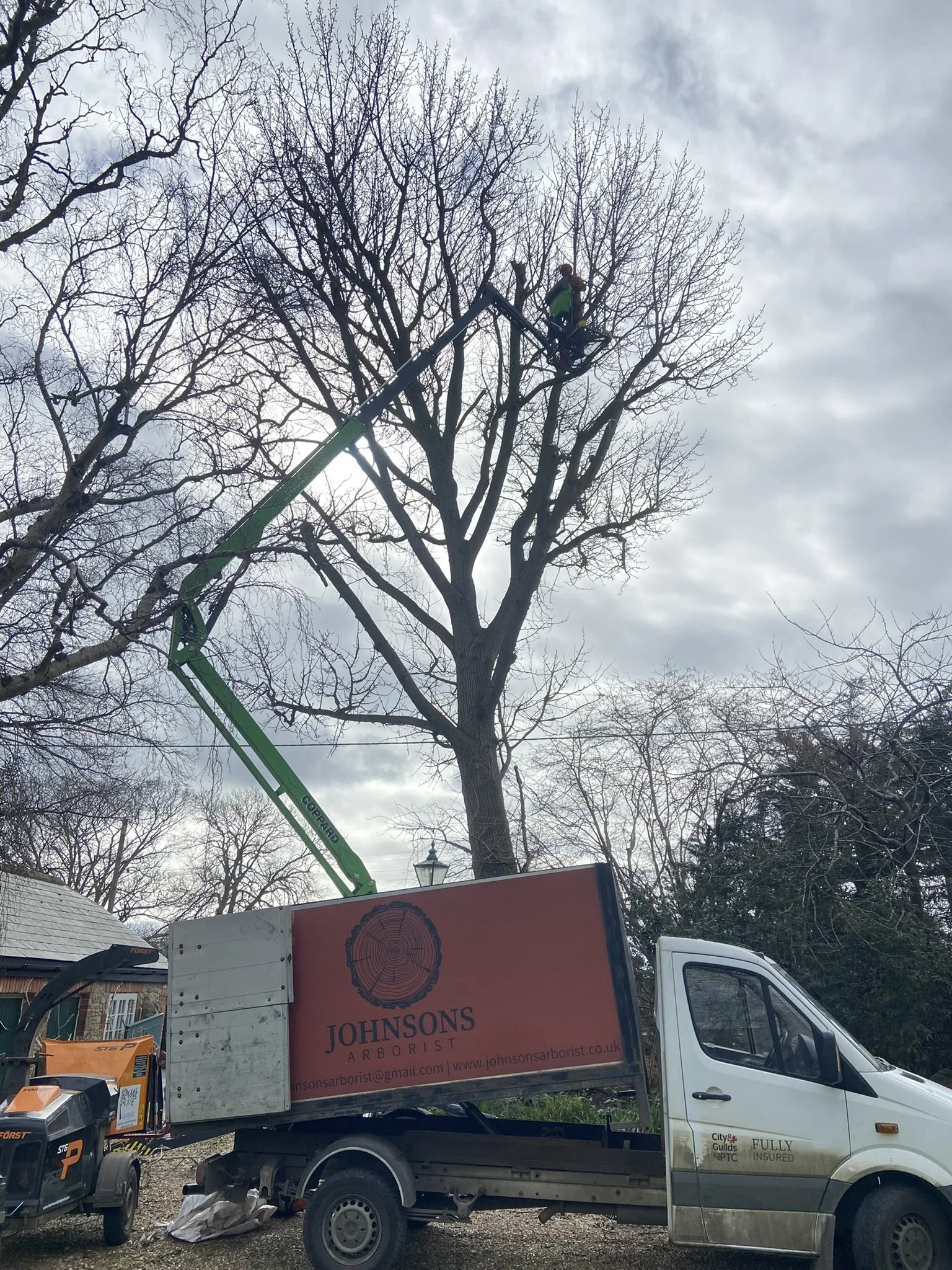
Before and After Photos
Tree Preservation Orders & Pollarding
Pollarding a protected tree without prior consent from the local authority is a criminal offence. If your tree is subject to a Tree Preservation Order or sits within a conservation area, we will handle the application process on your behalf before any work begins. We can also advise on the likely outcome of an application given the nature of the proposed work.
AREAS WE COVER
Pollarding Across Wiltshire
We provide pollarding services across Wiltshire and the surrounding area, including:
Melksham and surrounding villages
Chippenham and Corsham
Calne and the surrounding area
Devizes and surrounding villages
Trowbridge and Bradford on Avon
Bath and surrounding area
Marlborough and the Vale of Pewsey
Warminster and Westbury
FAQ’S
Frequently Asked Questions
What is the difference between pollarding and crown reduction?
Crown reduction removes a proportion of the canopy while retaining the natural shape and form of the tree. Pollarding is a more severe operation that removes all or most of the canopy back to the trunk or a framework of main branches. Pollarding results in a fundamentally different tree form and requires ongoing management on a regular cycle.
Which trees can be pollarded?
Willows, limes, planes, London planes and some oaks respond well to pollarding. Many other broadleaved species can also be pollarded successfully. Conifers and many ornamental species are generally not suitable as they do not regenerate well from old wood. We will advise on suitability when we assess your tree.
When is the best time of year to pollard?
Most pollarding is best carried out in late winter or early spring before the growing season begins, when the tree is dormant and the risk of disease transmission is lower. Some species such as willows can be pollarded in late summer. We will advise on the best timing for your specific tree.
How often does a pollarded tree need to be maintained?
This depends on the species and the desired effect, but most pollarded trees need attention every two to five years. Leaving it longer than this can result in heavy, weakly attached regrowth that becomes a structural risk.
Can you take on a neglected pollarded tree?
Yes - we regularly assess and work on pollarded trees that have not been maintained for several years. Depending on the size and condition of the regrowth we will advise on the safest and most appropriate course of action.
Get a Free Quote for Pollarding in Wiltshire
Contact Johnsons Arborist today for a free, no obligation visit and quote. We cover Melksham, Chippenham, Devizes, Calne, Trowbridge, Bath and the surrounding areas of Wiltshire.